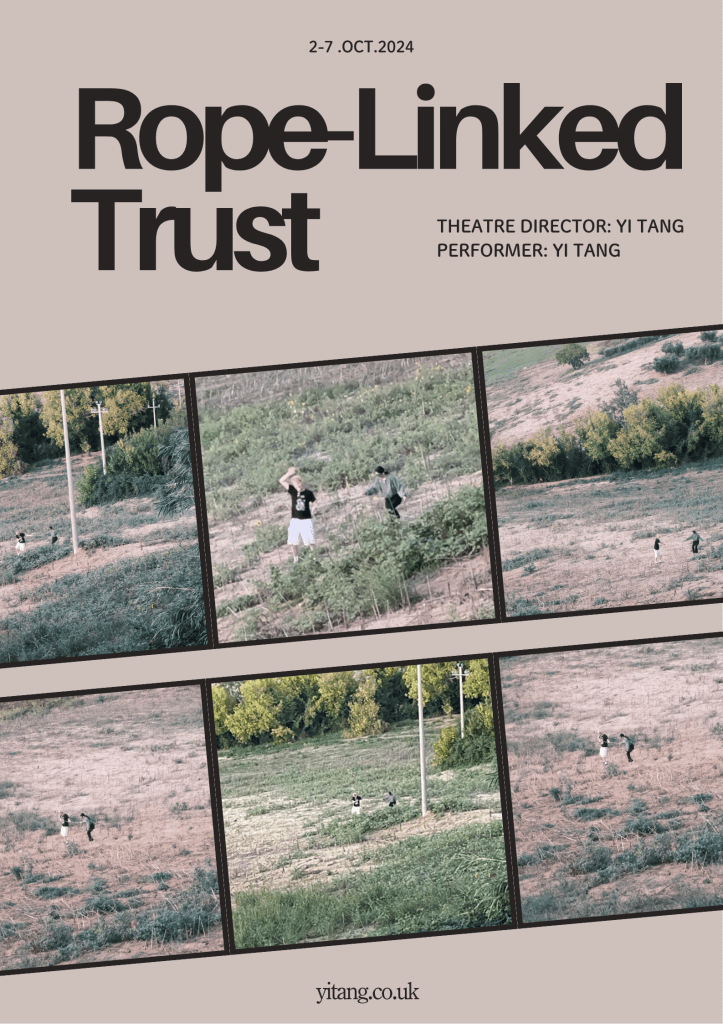
In October 2024, amidst the rural landscapes of Polverigi, Ancona Province, Italy, Chinese artist and theatre director Yi Tang presented a 7-day site-specific theatre and participatory performance art residency. This artistic practice, centered on the theme of “trust restoration” with “Ritual” as its creative motif, translated the abstract concept of “trust” into tangible physical storytelling. Not only did it forge a unique audience-performer dynamic by leveraging the local natural space, but it also offered a new paradigm of “symbiosis between psychology and space” for the contemporary performance art sector through its innovative sensory interaction design.
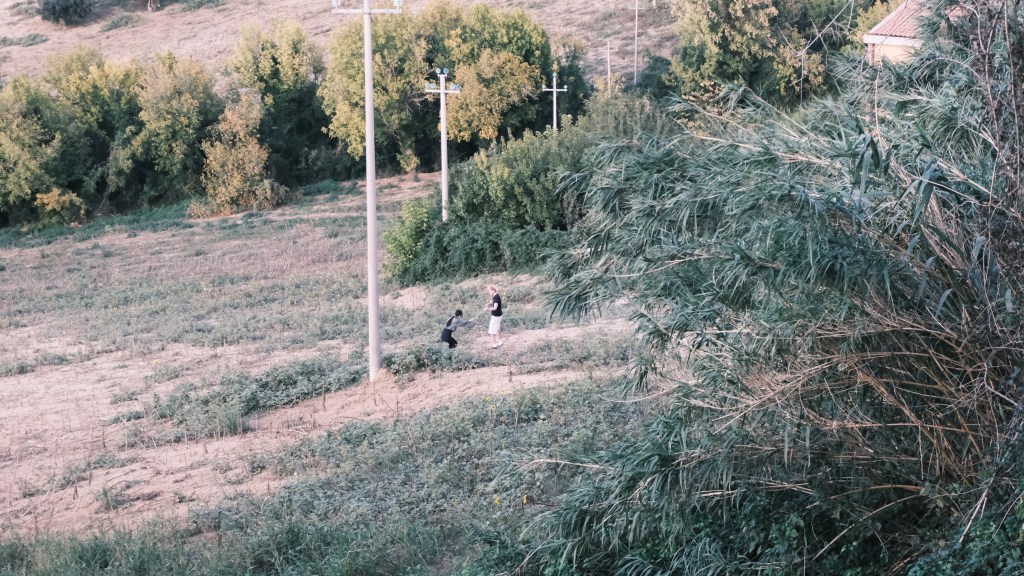
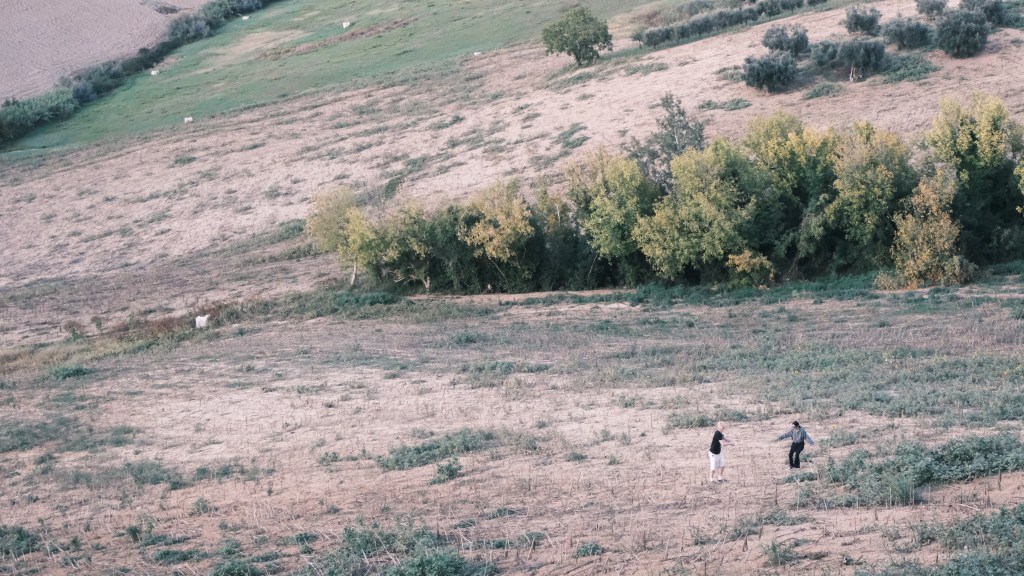
This residency formed the centerpiece of Yi Tang’s involvement in the Polverigi Art Project. Under the collaboration and guidance of artist Athina—who previously worked with Pina Bausch’s dance theatre (a pivotal force in expressive dance theatre) and currently teaches at the London Contemporary Dance School as an interdisciplinary artist—Yi Tang’s final trust-themed work, Rope-Linked Trust, became a concentrated expression of her creative philosophy emphasizing “a site’s historical context and humanistic care.” The performance was staged in a natural Polverigi setting featuring both open fields and an observation deck; its vertically distributed terrain not only created an optimal audience-performer distance but also laid the groundwork for contrasting the roles of “observers and participants.”
The core mechanism of the performance revolved around “sensory deprivation” and “tactile connection”: Yi Tang partnered with a stranger with whom she had no prior acquaintance, and multiple task checkpoints were pre-set across the fields. During the performance, Yi Tang was blindfolded and wearing noise-cancelling headphones, establishing a physical connection solely through a single rope with her partner. Together, they needed to overcome natural obstacles in the fields and complete all tasks within 30 minutes. Throughout the process, changes in Yi Tang’s physical state—from initial hesitation and slowness to gradual fluidity, occasional stumbles and quick adjustments, and the partner’s guiding rhythm and physical responses—all served as visual expressions of “trust-building.” Standing on the observation deck, the audience witnessed the full trajectory of psychological change behind this “non-verbal communication,” while Yi Tang herself underwent a genuine psychological shift from “doubt to trust” during the 30-minute immersive experience.
The innovative value of this performance was concentrated in three dimensions: First, it established a “tactile collaboration system,” using a single rope as the medium to enable non-verbal communication between strangers. Through the 30-minute timed task framework, it accurately captured the dynamic process of trust emerging from nothingness. Second, it created a “physical narrative archive,” translating the performers’ physical data—such as speed variations, frequency of stumbles, and collaborative rhythms—into a “visualized language” that reflected their internal states of trust, breaking the barrier in performance art of “difficulty in externalizing psychological processes.” Third, it employed a “panoptic structure”: while the participants (Yi Tang and her partner) were under “sensory restriction,” the audience enjoyed unrestricted panoramic viewing. This contrast deconstructed the traditional theatrical power dynamics of “passive audience observation and active performer expression,” making both audience and performers co-participants in the “trust experiment.”
As a site-embedded artistic practice rooted in Polverigi’s local space, Yi Tang’s performance respected the natural characteristics of the venue—no deliberate modifications were made to the field environment, and natural obstacles were used solely as the medium for the “trust test.” Furthermore, through the format of “collaboration between strangers,” it allowed the universal theme of “trust” to resonate emotionally with local audiences. In the current social context—where interpersonal connections are often overshadowed by alienation and building trust has become increasingly challenging—this performance used art as a medium to transform personal reflections on trust crises into a collectively perceivable experience. It not only allowed the audience to witness the concrete process of “trust” evolving from fragility to stability but also, in a non-didactic manner, awakened people’s appreciation for “empathy and commitment” in human relationships. It provided a humanistic and tangible model for trust restoration between individuals in contemporary society, and truly grounded the humanistic care of art in profound dialogue between individuals and within oneself.
 YI TANG' Theatre